 Doughbies
Chewy Chocolate Chip Cookies: One-Bowl Recipe, No Mixer
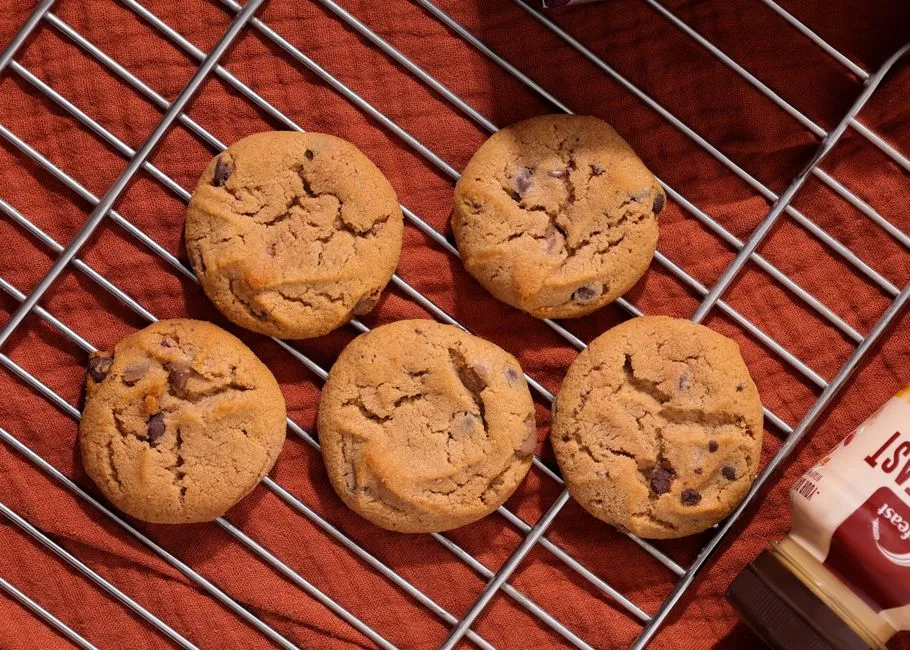
The Chewy Chocolate Chip Cookie Formula: Melted Butter, More Brown Sugar, One Bowl
A chewy chocolate chip cookie comes from three deliberate choices: melted butter instead of creamed, more brown sugar than white, and an extra egg yolk. Melted butter skips the aeration that makes cookies cakey, brown sugar holds onto moisture, and the yolk adds fat and richness without extra structure. Because the butter is melted, you can stir everything together in one bowl with a spatula — no stand mixer, no hand mixer, no softening butter on the counter for an hour.
This recipe makes about 20 cookies with dense, bendable centers and lightly crisp edges. Plan on 75 to 85 minutes start to finish, most of it hands-off: roughly 15 minutes of actual work, a 20–30 minute rest for the dough, three sheet loads at 11–13 minutes each because the cookies bake one sheet at a time, and 5 minutes of cooling at the end. If you want cookies faster than that, freeze a batch of dough balls now and bake them on demand later — the last section covers it.
Ingredients
Weights first, because a scale is the single biggest upgrade to cookie consistency. Cup measures are close equivalents, not exact ones.
- 170 g unsalted butter (12 tablespoons), melted and cooled 5 minutes
- 200 g light brown sugar (about 1 cup, packed)
- 100 g granulated sugar (½ cup)
- 1 large egg plus 1 large egg yolk, at room temperature
- 2 teaspoons vanilla extract
- 270 g all-purpose flour (2¼ cups, spooned and leveled)
- ¾ teaspoon baking soda
- ¾ teaspoon fine salt
- 250 g semisweet chocolate chips or chopped chocolate (about 1½ cups)
If you only have salted butter, use it and cut the added salt to ¼ teaspoon.
Method
- Heat the oven to 350°F (175°C) and line two baking sheets with parchment. At 8 cookies per sheet, 20 cookies means three loads, so you will reuse one of the sheets for the last one.
- Melt the butter in a large microwave-safe bowl (or a saucepan, then transfer). Let it cool about 5 minutes — it should feel warm, not hot, or it will scramble the egg and thin the dough.
- Whisk in both sugars until the mixture looks like wet sand, about 30 seconds. Don't expect it to get fluffy; that's a creaming thing, and we're not creaming.
- Add the egg, yolk, and vanilla and whisk until smooth and glossy, about 30 seconds more.
- Stir in the flour, baking soda, and salt with a spatula just until no dry streaks remain. Overmixing here builds gluten, and gluten past a certain point means tough, not chewy.
- Fold in the chocolate, then let the dough rest 20–30 minutes at room temperature. This isn't optional busywork: melted-butter dough is soft, and the rest lets the flour hydrate and the butter firm up so the cookies don't spread into puddles.
- Scoop 50-gram balls (about 3 level tablespoons) onto a lined sheet, leaving 2 inches between them — 8 per sheet is safe. Scoop one sheet at a time and keep the rest of the dough covered in the bowl at room temperature; it holds fine for the hour or so it takes to work through all three loads.
- Bake 11–13 minutes, one sheet at a time, until the edges are set and golden but the centers still look slightly underdone and shiny. That underdone center is the chew; it finishes setting on the hot pan.
- Cool on the pan 5 minutes, then move to a rack. Straight from the oven the centers are still fluid enough to tear or fold when you lift them; five minutes on the pan sets them enough to slide off cleanly.
- Let the sheet cool completely before scooping the next load onto it. Dough dropped on a warm pan starts melting before the oven gets a say, and that is one of the most reliable ways to turn this dough thin and flat. Rinsing the empty sheet under cool water and drying it takes about a minute and saves waiting for it.
If your cookies still spread thin despite the rest and the cool sheets, something else is going on — usually butter temperature or flour measurement. Our guide to why cookies come out flat walks through the seven usual suspects and the fix for each.
Chewy vs. Crispy: What Each Choice Does
Every texture outcome traces back to a variable you control. The third column is the part most tables leave out — not every lever pulls with the same force.
| Variable | For chewy | For crispy | How much it moves the texture |
|---|---|---|---|
| Butter | Melted | Creamed (softened) | The biggest single swap. Change only this and the same dough goes from dense and bendable to lifted and cakey |
| Sugar ratio | Mostly brown | Mostly white | Large, and it compounds. Sets how long the chew lasts — days rather than hours |
| Egg | Whole egg + extra yolk | Whole egg only | Moderate. Richer, more bendable middle, but it won't rescue a creamed-butter dough |
| Bake time | Pull when centers look underdone | Bake until evenly golden | Moderate, and instant. Two minutes decides chewy or crunchy on cookies already in the oven |
| Dough ball size | Larger (50 g) | Smaller and flatter | Small. A thicker cookie simply keeps more underbaked middle |
Of the three choices the recipe is built on, two carry most of the weight. Melted butter is the one to change first: creaming whips air into the dough and that air becomes lift, so a creamed version of this exact ingredient list bakes up noticeably cakier. Brown sugar is hygroscopic — it attracts and holds water — so the brown-heavy ratio is what keeps cookies moist for days instead of hours. The extra yolk is real but smaller in effect: it enriches a cookie the first two levers have already made chewy.
Why No Mixer Actually Helps
Creaming butter and sugar with a mixer whips air into the dough, and that air becomes lift in the oven — great for a cakey cookie, wrong for a chewy one. Melted butter can't hold air, so the dough stays dense by default. The one-bowl method isn't a shortcut with a tradeoff; for this texture, it's genuinely the better technique. If terms like creaming, hydration, or carryover baking are new to you, the Baking Basics section covers the cause-and-effect behind all of them.
Storage and Make-Ahead
- Baked cookies keep 3–4 days in an airtight container at room temperature. A slice of sandwich bread in the container donates its moisture to the cookies and extends the chew by a day or two.
- Dough balls freeze beautifully. Freeze them solid on a sheet pan, then bag them for up to 2 months. Bake straight from frozen at 350°F (175°C) for 13–16 minutes.
- Refrigerated dough holds 48 hours and gets a deeper, toffee-like flavor as the flour hydrates — bake a test batch fresh and another the next day and taste the difference.
Freezing is also the answer to the other temptation: raw dough contains uncooked flour and egg, both of which can carry bacteria, so bake a frozen ball instead of snacking on the bowl. Sixteen minutes of patience gets you a warm, chewy cookie, which was the whole point.
Frequently asked questions
Why does melted butter make cookies chewy?
Melted butter can't hold air the way creamed butter does, so the dough stays dense instead of turning cakey in the oven. It also lets the sugar dissolve more fully into the fat and egg, which produces a moister, more bendable crumb. As a bonus, melted butter means you can mix the whole dough in one bowl with a spatula — no mixer, and no waiting for butter to soften.
Do I really need to rest the dough before baking?
Yes, and you can see when it has worked: freshly mixed melted-butter dough slumps off the spatula, while rested dough holds the shape of a scoop and feels cool at the center. That's your cue, more than the clock — 20 to 30 minutes at room temperature is typical, but a hot kitchen may need longer. Skipping the rest doesn't ruin the batch, it just costs you height: the cookies bake wider, thinner, and crisper at the edges. If you'd rather not wait around, refrigerate the dough instead and bake any time in the next 48 hours.
How do I know when chewy cookies are done?
Pull them at 11-13 minutes, when the edges are set and golden but the centers still look slightly shiny and underdone. Carryover heat finishes the middles during 5 minutes of cooling on the hot pan. If you bake until the whole cookie looks evenly done, the centers will set up crunchy rather than chewy once cooled. Ovens vary, so trust these visual cues over the clock.
Can I bake two sheets at once to save time?
You can. Three sheet loads run about 36 minutes one at a time; on two racks it becomes two oven rounds and closer to 25. The trade is evenness. Two racks means the lower sheet gets more bottom heat and the upper sheet more top heat, so swap the sheets and rotate each one front to back halfway through, and add a minute or two. The recipe's timing assumes one sheet on the middle rack because that is the version that comes out consistent; the two-sheet method is the trade you make when the clock matters more.
Can I freeze the cookie dough?
Yes, and it works exceptionally well. Scoop the dough into 50-gram balls, freeze them solid on a sheet pan, then transfer to a freezer bag for up to 2 months. Bake straight from frozen at 350°F (175°C) for 13-16 minutes — no thawing, and the extra chill actually helps them hold their height. Frozen balls are also the sane alternative to eating the dough raw: the edible cookie doughs sold in tubs are a different formula built for it, made without egg and with heat-treated flour, and this one is neither.